Have you ever wondered what is h e n n a and why it’s so popular around the world? Henna isn’t just a trend it’s an ancient form of art that connects culture, nature, and beauty. From the deserts of North Africa to Indian wedding ceremonies, henna has traveled across centuries, symbolizing joy, blessings, and creativity.
This article explores in detail what is h e n n a, how it’s made, its history, meanings, and modern trends that make it timeless.
What Is H e n n a?
Let’s start simple: What is h e n n a exactly?
Henna is a natural dye made from the leaves of the Lawsonia inermis plant, which grows in hot, dry regions like India, the Middle East, and North Africa. Once dried and ground into a fine powder, it becomes the base of a paste that stains the skin, hair, and even fabrics a deep reddish-brown.
When people ask what is h e n n a, the answer isn’t just about the dye it’s about tradition, art, and identity. For thousands of years, henna has been used in celebrations, rituals, and beauty routines, making it a meaningful part of many cultures.
The Origins and History of H e n n a
Ancient Beginnings
To truly understand what is h e n n a, we must look back to its roots.
Henna has been used for over 5,000 years, first discovered in ancient Egypt. Historical records show that even Cleopatra used henna to beautify her hands and hair. It was also used to stain the nails and hair of mummies before burial a symbol of honor and purity.
Spread Across the World
The question of what is h e n n a becomes even more fascinating when you trace its journey. Through trade routes, henna spread from Egypt to India, Persia, and North Africa. Every region adapted henna to its culture:
- In India, it became a part of weddings and festivals.
- In the Middle East, it symbolized protection and good fortune.
- In Africa, it was used as a mark of celebration and status.
Even today, when you ask someone what is h e n n a, their answer might vary by culture — but the shared meaning of joy and beauty remains the same.
The Science Behind What H e n n a Is
Understanding what is h e n n a scientifically reveals its natural magic.
The dye comes from a compound called lawsone, which binds with keratin — the protein in our skin and hair. This bond produces a long-lasting stain that deepens over 24–48 hours.
How Henna Works
- The leaves are dried and ground into powder.
- The powder is mixed with lemon juice or essential oils.
- The paste releases dye as it rests.
- When applied to skin or hair, the dye molecules bind with proteins, creating color.
That’s the chemistry behind what is h e n n a, showing it’s not just tradition but also natural science in action.
Different Types of H e n n a
When exploring what is h e n n a, it’s important to know that not all henna is the same.
Here are the main types:
1. Indian Henna
Deep red tone, perfect for bridal mehndi designs.
It’s fine-textured, smooth, and gives a strong stain.
2. Moroccan Henna
Known for quick staining and earthy color, used for both art and hair dye.
3. Sudanese Henna
Rich, deep color used in traditional celebrations.
4. Neutral Henna (Cassia Obovata)
A different plant, used to condition hair without coloring it.
5. Black Henna (Warning!)
While searching what is h e n n a, beware of black henna. It often contains chemicals like PPD (Paraphenylenediamine) that can cause skin reactions. True henna is always greenish-brown in paste form and stains reddish-brown, never black.
Traditional Uses of H e n n a
1. Weddings and Celebrations
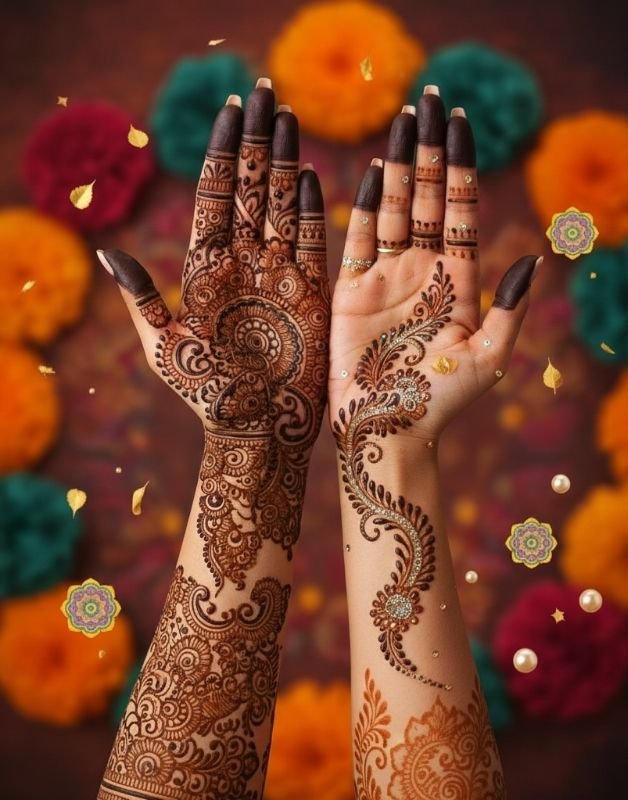
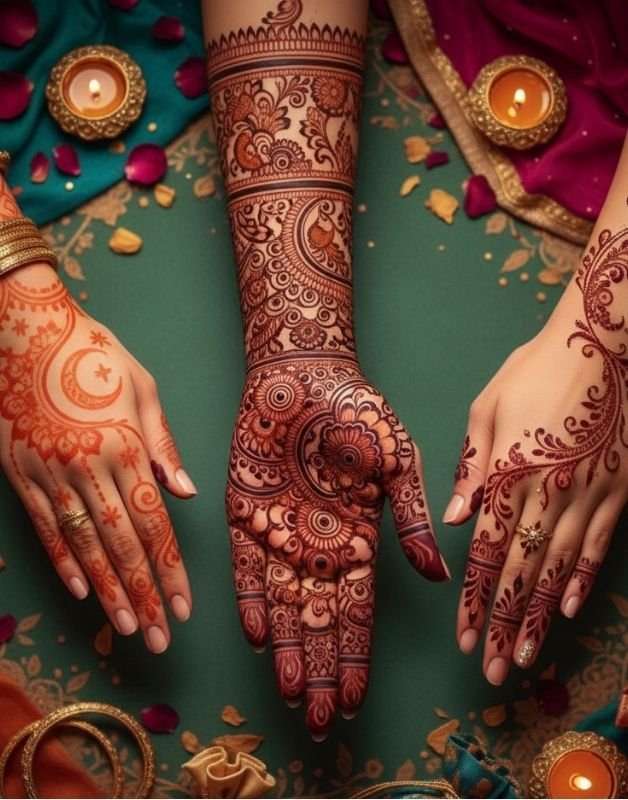
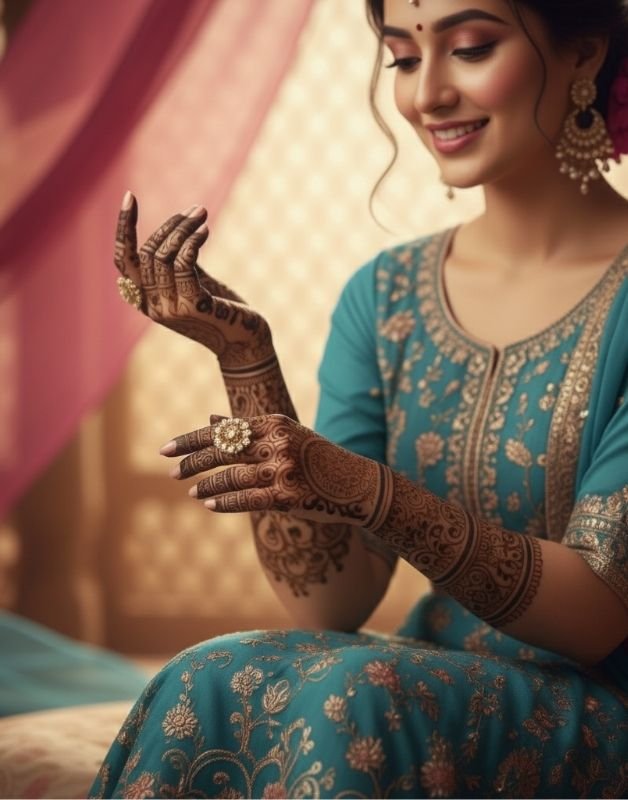
The most common answer to what is h e n n a used for is weddings. In Indian, Pakistani, and Arabic cultures, brides wear intricate henna designs symbolizing love and luck. The Mehndi ceremony is a cherished pre-wedding ritual filled with music, laughter, and blessings.
A popular belief says the darker the henna color, the deeper the love between the couple — making what is h e n n a a symbol of affection and connection.
2. Festivals and Religious Events
Henna is applied during Eid, Diwali, and various African celebrations. It’s not just about beauty it’s about expressing joy and spirituality.
3. Healing and Cooling
In old traditions, when people asked what is h e n n a used for, the answer often included health. Henna paste has cooling and antiseptic properties. It was used to treat burns, fever, and skin irritations.
4. Hair Care
Today, when people search what is h e n n a, many are looking for natural hair color options. Henna:
- Strengthens hair
- Reduces dandruff
- Adds shine and volume
- Naturally colors gray hair
It’s nature’s conditioner and dye in one.
Meaning and Symbolism of H e n n a
When discussing what is h e n n a, it’s impossible to ignore its symbolism. Each pattern carries spiritual and emotional meanings.
| Design Element | Symbolic Meaning |
| Flowers | Joy and new beginnings |
| Vines and leaves | Devotion and vitality |
| Paisleys | Fertility and prosperity |
| Mandalas | Unity and wholeness |
| Peacocks | Beauty and grace |
So, what is h e n n a beyond art? It’s a form of storytelling a way for women to express love, celebration, and identity through design.
Modern Trends in H e n n a Art (2025 Edition)
In the modern world, what is h e n n a has evolved beyond weddings. Let’s explore the latest trends:
1. Minimalist Henna
Small, delicate patterns on fingers or wrists are trending. People love the subtle, elegant look.
2. White Henna
Not real henna, but a body paint alternative that gives a chic bridal touch. Perfect for photoshoots.
3. Glitter Henna
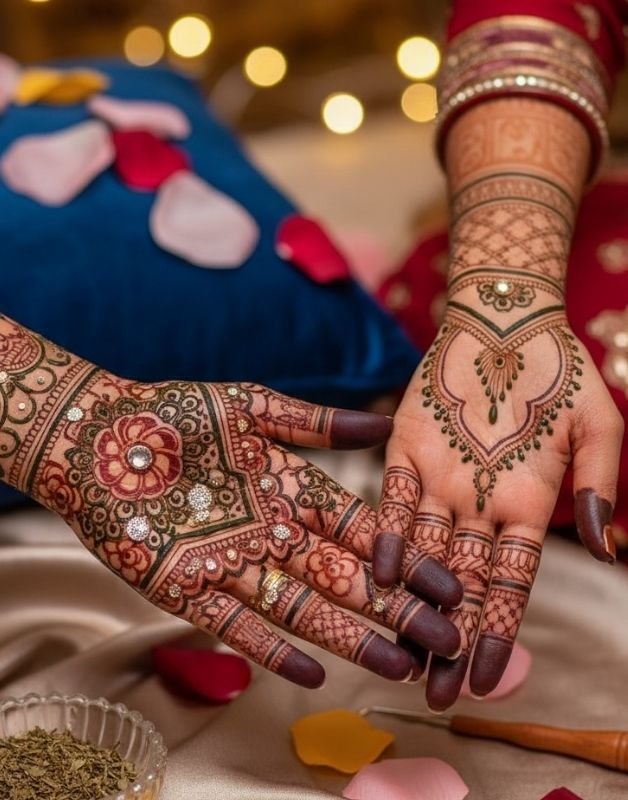
Adds sparkle to traditional designs ideal for parties and festivals.
4. Fusion Styles
Modern artists mix Indian, Arabic, and Moroccan motifs to create hybrid designs. This trend is redefining what is h e n n a art in 2025.
5. Henna for Men
Yes, men are embracing henna too simple patterns or symbolic markings for special occasions.
How to Apply Henna: Step-by-Step
If you’re curious what is h e n n a application process, here’s a simple guide:
- Mix the Paste – Combine henna powder, lemon juice, and sugar. Rest it 6–12 hours.
- Prepare the Skin – Clean and dry your hands.
- Apply the Design – Use a cone to draw patterns.
- Dry and Seal – Let it dry for 4–6 hours. Apply lemon-sugar solution to darken the color.
- Remove and Care – Scrape off the dried paste and avoid water for 12 hours.
With care, henna stains can last up to two weeks. This makes what is h e n n a not just temporary art but a lasting memory.
Tips for Long-Lasting Henna Stains
- Exfoliate skin before applying.
- Keep paste on as long as possible.
- Use oils (not water) to remove paste.
- Apply natural oils daily to extend color.
- Avoid chlorine and soap in the first 24 hours.
These simple steps help maintain the beautiful result that defines what is h e n n a beauty.
Cultural Importance of H e n n a Around the World
India & Pakistan
Henna, or mehndi, is used for weddings, festivals, and family gatherings. When someone asks what is h e n n a here, they’ll say it’s a blessing a symbol of love and luck.
Middle East
Henna is part of religious traditions like Eid and weddings. It represents prosperity and joy.
North Africa
Henna is used during childbirth and community rituals to bring protection and fortune.
Western Countries
In the West, people discovering what is h e n n a use it for fashion, tattoos, and art. Henna bars and festivals celebrate its aesthetic value.
The Health and Beauty Benefits of H e n n a
If you’re exploring what is h e n n a good for, here’s what makes it powerful:
- Natural hair color and conditioner
- Cooling agent for the body
- Antibacterial and antifungal
- Treats dandruff and itchy scalp
- Natural nail and skin strengthener
So what is h e n n a really? A single plant offering art, beauty, and wellness in one.
Henna in Modern Fashion & Media
Today, celebrities and influencers are redefining what is h e n n a by wearing it proudly. From Beyoncé to Rihanna, many have shown off elegant henna tattoos on stage and in photo shoots.
On Instagram and TikTok, hashtags like #HennaArt and #WhatIsHenna are trending as artists share their unique designs and cultural stories.
Henna has truly become a global art form, connecting modern fashion with ancient roots.
The Spiritual Side of H e n n a
Beyond beauty, understanding what is h e n n a also means understanding its spiritual energy. Applying henna is often a ritual of joy, relaxation, and togetherness. In many traditions, women gather to celebrate love, friendship, and blessings while creating intricate designs.
This spiritual bond makes what is h e n n a more than decoration — it’s a connection between nature and the soul.
Common Questions About What Is H e n n a
1. How long does henna last?
Natural henna lasts between 7–14 days, depending on skin type and aftercare.
2. Is henna safe for everyone?
Yes, natural henna is safe. Avoid “black henna,” which may contain harmful chemicals.
3. Can henna be used on hair?
Absolutely! Henna naturally dyes and conditions hair without damaging it.
4. What color does real henna give?
Natural henna gives an orange to dark reddish-brown color depending on skin tone and care.
5. Why is henna used in weddings?
It symbolizes love, fertility, and blessings for a happy married life.
Conclusion: The Timeless Art of H e n n a
Now you know what is h e n n a a natural dye, a cultural tradition, a healing plant, and a timeless art form. From ancient queens to modern brides, henna has decorated hands, healed hearts, and symbolized joy for centuries.
Whether you use it for beauty, spirituality, or creativity, henna connects us to nature and tradition in the most artistic way possible.
Henna is not just a color on the skin it’s a celebration of life, love, and heritage.